
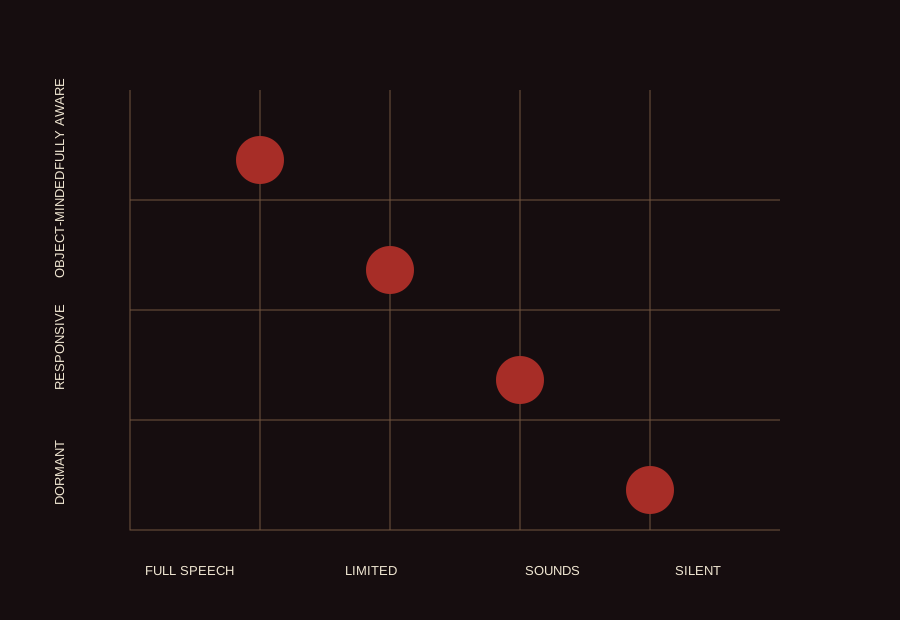
Face States
Expression can remain, freeze or be redesigned.
Fully expressive preserves readable emotion and makes immobility more conspicuous: the face changes while the form cannot follow. Doll-still restricts visible movement to eyes, tiny mouth changes or nothing at all. It supports display fiction because a viewer may not know how much awareness sits behind the fixed expression.
Masked places another designed surface over identity. Eyes sealed removes visual response and shifts attention to sound, breath or activation. Mouth configured makes speech and access compete for the same feature. Featureless is the most depersonalized option and should be used sparingly because it removes the facial continuity that distinguishes a transformed character from a manufactured object.
Voice States
Speech is one function among several.
Full speech permits analysis, negotiation inside the fiction and direct description of the object condition. It does not imply the power to leave or reposition. Limited speech restricts vocabulary, timing or volume. Sounds only turns communication into breath, moans and command responses. Silent removes vocal confirmation entirely.
A configured mouth creates a deliberate conflict. It may be capable of speech until used, capable only of short phrases or fixed into a form that makes words impossible. The archive records that as design rather than punishment anatomy. The surface is already complete and safe within the impossible fiction.
Gaze
Eyes can become the last autonomous gesture.
For an immobile character, gaze can indicate recognition, refusal within a negotiated premise, attention, embarrassment or learned stillness. If the head cannot turn, peripheral attention becomes part of the scene. If even eye movement is fixed, the User must decide whether awareness is visible at all.
The strongest visual design avoids exaggerated horror. A mature manga-editorial face, controlled eyes and a continuous material transition communicate more than a scream or wound ever could. This archive uses abstract SVGs in v1, but any later illustration must follow the same rule.
Continuity
The face keeps a character present without restoring personhood.
Keeping a name and recognizable face allows a Transformation Record to connect before and after. The archive can say “Mina commissioned the form” and later address “the doll” without pretending the earlier character disappeared. Continuity makes object status feel assigned to someone rather than merely built into a product.
That tension is central to Japanese doll- and object-conversion fantasy: the new category is visible, yet traces of the previous character remain available to be read. Form Studies use this continuity as fiction, not as a claim about real identity or disability.
Response Timing
Delay becomes a visible part of the form.
An immobile face does not need to be completely frozen to feel object-like. The interval between an external action and a small response can do more work than a large expression. Eyes may track only after the form has been turned. A configured mouth may need several seconds to produce one word. A command-responsive membrane may answer with sound only after the correct phrase is complete.
That timing establishes hierarchy. The room acts first: a cover opens, a support tilts, a User speaks, a mounted collar turns. The character registers what happened afterward through the limited channel still available. Even full speech cannot reverse the order when the station determines position before the character can comment on it.
Form Studies use these delays to keep awareness readable without giving the object conventional body language. The completed silhouette stays clean. Perception appears as a narrow reaction inside it, making the character present and the object status simultaneously unmistakable.